

 July 18, 2026 · Mahesh Agarwal

We have just finished three days at the CMAI 83rd National Garment Fair in Mumbai, and if you walked those halls you could not have missed it. Whatever else was new this season, the floor belonged to one silhouette: co-ord sets. Not tucked into a corner as a niche — as the headline. Stall after stall, the “new arrivals” rack was a co-ord rack.
Six months ago at the CMAI 82nd fair in January, co-ords were one strong category among several. This time they were the whole conversation. But the fair taught us five things, and the loudest one was not the most useful. Here is what three days on the floor — and a full order book — actually told us.
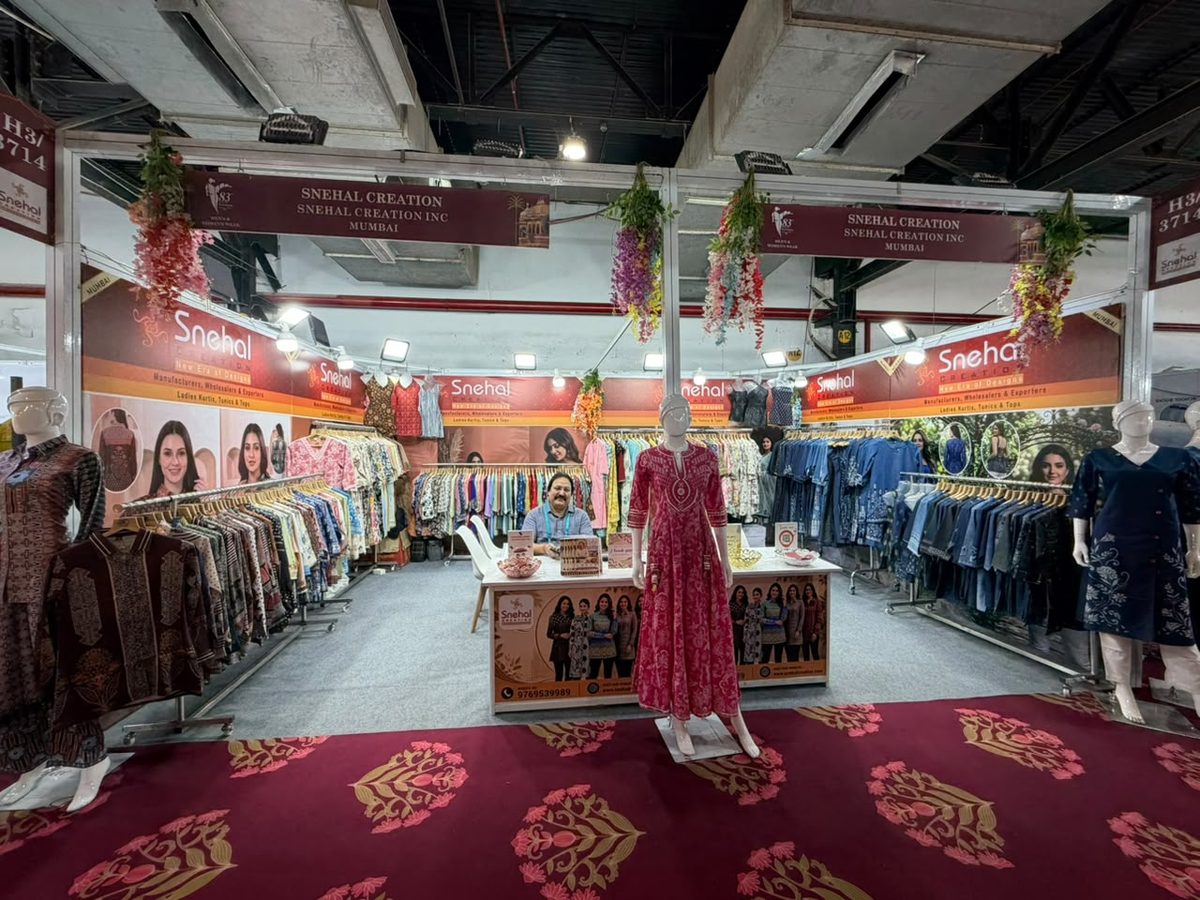
What stood out at CMAI 83rd was not the volume of co-ords being shown. It was the split. Co-ords were no longer one idea repeated at every stall; they had been divided into distinct ranges for distinct wearers. There were seasonal co-ords built around the fabric of the moment, meant to move within a season and make way for the next. There were wedding co-ords with heavier work and richer fabric, made for the function itself. And there were sider co-ords, a category that barely existed as its own line a year ago. When a category stops being one product and starts growing sub-categories — each with its own buyer, occasion and price point — it has stopped being a bet and become a staple. How to make the most of it: stop asking your supplier whether they have co-ords — everyone does now — and start asking which occasion each co-ord range is built for, because that is the only thing left that separates your rack from the shop next door.
In the trade, siders are the bride’s close friends and family — the people standing beside her through the functions. Their outfits have quietly become a category of their own, and at this fair there were co-ord ranges built specifically for them. Think about what that means as a buyer. One bride buys one wedding outfit. But one wedding puts fifteen or twenty siders into coordinated clothes, across three or four functions. That is volume, it repeats through every wedding season, and it is far less price-sensitive than everyday wear — because nobody wants to be the one who looks out of place in the photographs. Yet most of the conversations we overheard on that floor were still aimed at the bride. How to make the most of it: if you stock wedding wear, ask your supplier what they have for the entourage rather than the bride — a bride is one sale, her siders are fifteen, and that order comes back every season.
Foot traffic is one thing; the order book is another. At our own stall the strongest demand came from four categories together: denim kurtis, tunics, A-line dresses and co-ord sets. Co-ords sold, certainly — but they did not outsell the rest. Denim kurtis, tunics and A-line dresses moved just as strongly, across both domestic retailers and export buyers. That is worth sitting with. The trend that fills a fair is not automatically the trend that fills your till every week, because a fair rewards novelty while a shop rewards repeat purchase. How to make the most of it: give the new category real space in your buying, but never at the cost of the ranges your regular customers already come back for — those quiet repeat sellers are what pay your rent between seasons.
While the whole floor chased co-ords, the quiet winner at our stall was a category almost nobody was pushing: our silk shirt-style tops, which came second in demand across the three days. The reason is simple once you see it. A shirt-style silhouette in silk sits between formal and ethnic — exactly the gap most retailers say they struggle to fill. The buyers who picked them up were not replacing their kurti buying; they were adding a range they did not previously stock, for a customer they were already losing to someone else. When an entire market moves in one direction, the space it leaves behind gets less crowded, and less crowded means less discounting. How to make the most of it: at your next fair, spend one hour walking the floor asking not “what is everyone showing?” but “what is nobody showing?” — that is usually the shortest route to a margin your competitors are not fighting you for.
We carried something to the fair that was not a product: a small booklet of the 12 lessons we have learned running a kurti business for 23 years — how to choose a supplier, how to price, how to manage stock, how to market. No catalogue, no price list, no order form. Just the guidance. All 200 copies were gone. And several visitors came back to the stall days later, simply to say thank you — more than one of them said some version of the same thing: everybody here is talking about selling their own goods; nobody is trying to help us run ours better. It was the most useful thing we learned in three days, and it had nothing to do with fabric. How to make the most of it: whatever your business, give your buyers something that helps them even when they do not order from you — it costs very little, and it is remembered long after a price list is thrown away.
CMAI 83rd said one thing loudly: co-ord sets have arrived as a permanent category, not a seasonal bet, and the sider range inside it is the part worth watching. But the fair also said something quieter and probably more useful — that the categories everyone ignores, and the relationships nobody invests in, are still where the real advantage is.
Snehal Creation has manufactured wholesale ladies kurtis in-house in Mumbai since 2003, supplying retailers, resellers and export buyers across India and 40+ countries. MOQ 12 pieces, quality checked before dispatch.
Browse the ranges that moved at CMAI: co-ord sets, denim kurtis, designer kurtis & tunics and three-piece sets.
Website: www.snehalcreation.com
WhatsApp: +91 97695 39989
New here? Register for wholesale prices.
Missed the booklet at the fair? The same 12 lessons are on our blog as a free series — the Kurti Business Growth Guide. Nothing gated, nothing to fill in.
बेहतर कुर्तियाँ, बेहतर बिज़नेस, बेहतर भविष्य।
